Integrity Is Orthogonal to Intellect
On the Rarity of Coherence in a Convenience Driven World
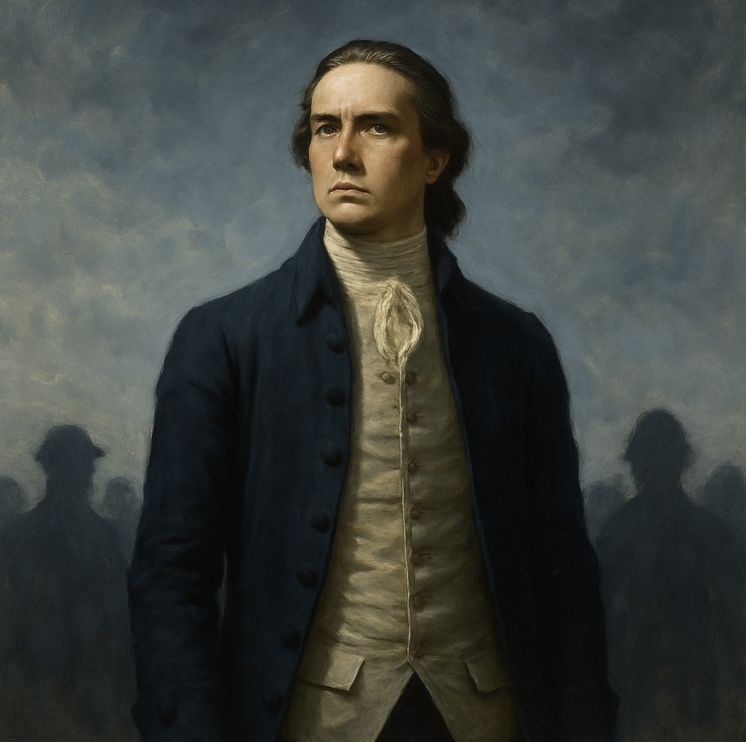
Most people assume that intellect and integrity travel together. If someone is intelligent, curious, or articulate in their reasoning, we instinctively expect a corresponding moral backbone. It feels intuitive: a mind trained to seek truth should also be aligned with it. But this assumption has no structural basis. Intellect predicts competence. Integrity predicts character. There is no structural reason for them to correlate. Integrity is orthogonal to intellect.
I define integrity along three ascending levels:
Basic integrity: Not being hypocritical, not being racist, xenophobic, or discriminatory.
Intermediate integrity: Refusing to say things one does not believe simply for social credit, status, or expediency.
Highest integrity: Standing up for truth even if it means going against the group, and not leaving those who do stand up alone in their truth. The willingness to be alone rather than complicit.
What Gives a Person the Highest Level of Integrity
People often assume integrity is a matter of virtue, willpower, or moral training. But the willingness to stand alone for truth and to never leave someone else standing alone, originates in structural necessity. This is very different from speaking up out of self-preservation. Martin Niemöller’s famous warning:
First they came for the Catholics… then the Socialists… then the Jews… and I did not speak out… And then they came for me, and there was no one left to speak for me.
teaches that silence is dangerous because one day the harm returns to you. Its logic is consequentialist: speak now, or you will have no defenders later.
Highest integrity does not operate on that axis. You speak not to protect yourself, but because silence would break your internal structure. Coherence, not outcome, is the governing principle.
For certain people, maintaining internal coherence is not optional. They cannot lie to themselves without losing something essential. Their sense of identity is built on truth-alignment. When truth and group comfort collide, they always choose truth. They cannot not do it. For these people, abandoning truth would mean becoming divided against themselves. The cost of that division is higher than the cost of standing alone.
And they cannot leave another truth teller standing alone either. This is not about loyalty to a person. It is loyalty to coherence itself. Allowing that to happen violates their internal architecture. So if they choose to step beside them, it is not out of social obligation, but allowing truth to be isolated is intolerable to their sense of self-invariance.
This is what separates the highest level of integrity from every other form. It is above moral performance and social signaling; it is neither ideological nor heroic. It is the refusal to self-fragment.
History offers only a few clear examples of people whose integrity was structural rather than performative. Nietzsche sacrificed his academic position, social belonging, and future prospects because he refused to align with institutions or ideas he believed false; isolation was the cost of coherence. Kierkegaard wrote against the Danish Church and the cultural establishment, fully aware that it would leave him alone, because accommodating them would have fractured the self he was trying to remain aligned with. And Johann Struensee, a German doctor by trade, is not a philosopher, but he governed Denmark according to principles he believed in: abolishing torture, restricting censorship, and reforming institutions, despite knowing these actions endangered him (and they did), he did it anyways. In that sense Struensee had more integrity than most Enlightenment thinkers. By acting on what he believed at great personal cost, he lived his truth. The enlightenment thinkers, on the other hand, mostly thought what was safe to think, at social distance.
Nietzsche, Kierkegaard and Struensee, luckily for humanity this is not an exhaustive list, their common pattern is the refusal to fragment. The cost of abandoning truth was greater than the cost of ruin.
Communities Cluster by Convenience, Not Courage
People rarely gather around courage. They gather around convenience. Communities form because of shared hobbies, shared skills, shared humor, shared identity markers, or shared environments. These are low friction bonds that require no moral courage and no personal risk. They allow people to coexist comfortably without confronting anything difficult. Even communities built around intellect are not exceptions.
Truth, however, is difficult. It disrupts cohesion and imposes a cost.
In any environment, the number of people willing to say what they actually believe is dramatically smaller than the number of people capable of understanding it. The number willing to stand by that truth under pressure is smaller still.
The majority will stay silent to avoid conflicts; speak in half-truths to maintain belonging; withdraw from situations requiring moral clarity; and defer to group consensus even when they know it is wrong. None of this requires malice. It is simply the default human setting: minimize social cost. Truth telling, by contrast, is a minority behavior because it demands accepting visibility, friction, and sometimes isolation. This is why the most principled voice in a room is often alone.
How These Principles Apply to Choosing Friends
The mistake many intelligent people make is assuming that shared cognition implies shared integrity. They select companions through intellect e.g. aligned interests, similar analytical styles, parallel curiosity. They assume moral alignment will follow naturally.
But this is a category error. Choosing friends through intellect alone produces a predictable outcome: eventual shock at moral inconsistency, unexpected cowardice. Choosing friends through integrity first produces a different outcome: fewer companions, but the right ones.
A brilliant mind without integrity is unstable. A solid character with average intellect is trustworthy. A brilliant mind with integrity is unbearable to most, and therefore always alone.
People who choose coherence over convenience have always been few. They do not form communities, they form lineages. Every age has known them, though rarely in the moment itself. But recognition is irrelevant. Integrity needs no audience. It asks only that a person remain whole.